Early Orthodontic Treatment: Why Age 7 Matters
Many parents assume braces are a teenage milestone. You picture middle school hallways, locker mirrors, and a mouth full of metal somewhere around eighth grade. That timeline is real for plenty of kids, but it is not the whole picture. Early orthodontic treatment, also called interceptive treatment, begins while some baby teeth are still present. The point is not to rush every child into braces. It is to give an orthodontist a chance to spot developing problems while your child’s jaw is still growing and easier to guide.
That is why age 7 shows up so often in conversations about kids and orthodontics. It is a common checkpoint, not a deadline for treatment. An evaluation at 7 is a look under the hood. Sometimes everything checks out and you simply come back later. Other times, catching a bite problem early can change the entire course of your child’s dental future.
What Early Orthodontic Treatment Actually Means
Early orthodontics refers to evaluating and sometimes treating children’s dental and jaw issues at a young age, typically between ages 7 and 10. The word “sometimes” carries a lot of weight here. An evaluation is not the same thing as starting treatment, and early treatment is not the same thing as a full round of braces.
Standard orthodontic treatment for common problems usually begins around age 9 to 14, once all the baby teeth are gone and many of the permanent ones are in place. Early treatment happens before that window. It may involve appliances that guide jaw growth, create room for crowded teeth, or correct a specific bite issue while the bones are still developing.
Because baby teeth are still on the scene, some parents wonder why anything would be done at all. The answer is that baby teeth are placeholders. They hold space for the permanent teeth waiting underneath, and they also influence how the upper and lower jaws grow. When that growth goes off track, waiting until the teen years can mean a more complicated fix.
Why Age 7 Is the Common Evaluation Checkpoint
By around age 7, most children have a mix of baby and permanent teeth. That combination is exactly what makes this age useful. An orthodontist can see how the permanent teeth are erupting, how the bite fits together, and whether the jaws are growing in a balanced way.
At this stage, the jaw is still growing, which means it can respond to guidance in ways an adult jaw cannot. Problems that might eventually require tooth removal or more involved treatment can sometimes be intercepted or simplified when they are identified this early.
An evaluation at 7 is a low-stakes appointment. Your child sits in a chair, the orthodontist examines the teeth and bite, and you leave with information. That information might be “see you in a year.” It might be “there is something worth watching.” It might be a recommendation to begin a short phase of treatment. All three are reasonable outcomes.
What an Orthodontist Looks For at a Young Age
A young evaluation is not just about whether the teeth look straight. The orthodontist is also assessing growth patterns and bite function. Several factors can contribute to bite irregularities, including genetics and habits such as thumb sucking or mouth breathing, along with early loss of baby teeth.
During the exam, the orthodontist typically checks:
-
Whether the upper and lower jaws are growing in proportion to each other
-
How the front teeth meet, including signs of an underbite or overbite
-
Whether there is enough room for permanent teeth to come in
-
Crowding, spacing, and teeth that are erupting in the wrong position
-
Crossbites, where upper teeth bite inside the lower teeth
-
The fit between the back teeth and how the jaws close together
-
Habits or patterns that could affect dental development over time
None of these observations automatically lead to treatment. They build a picture the orthodontist can use to decide whether watching, waiting, or acting makes the most sense for your child.
Problems Early Treatment Can Address
The goal of early treatment is to correct the growth of the jaw and certain bite problems, such as an underbite. It also helps make room for permanent teeth that are crowded or blocked from coming in properly.
Early orthodontic treatment assists with preventing serious, unfixable mouth and teeth alignment problems, or malocclusions, later on. In practical terms, that can mean:
-
Guiding jaw growth so the upper and lower jaws relate to each other more evenly
-
Creating space for permanent teeth that do not have enough room to erupt
-
Correcting a crossbite that could affect chewing or wear on the teeth
-
Reducing the risk of damage to front teeth that stick out
-
Shifting the growth pattern in a direction that supports better long-term function
Notice that many of these are about structure and function rather than appearance. A smile that looks fine on the surface can still have a bite that is developing unevenly underneath.
What Phase 1 Treatment Looks Like
When early treatment is recommended, it is often described as Phase 1. This is the first stage of a two-part approach, and it usually runs on a shorter timeline than a full teen treatment plan.
Phase 1 treatment typically lasts only 10 to 15 months, plus an intervening period of retainer wear before the start of Phase 2 treatment. Phase 2 is the more familiar comprehensive phase that happens later, once most or all of the permanent teeth have come in.
It helps to think of the two phases as doing different jobs. Phase 1 addresses growth and structural problems that are best handled while your child is young. Phase 2 fine-tunes the final position of the teeth once the adult dentition is in place. Some children who complete Phase 1 need less work in Phase 2. Others may not need Phase 2 at all.
When Very Early Treatment Might Be Considered
Age 7 is a common evaluation point, but it is not the only one. There are situations where treatment considerations start even earlier. Research on very early orthodontic treatment has examined approaches for children as young as 4 to 5 years old, where appliances are bonded to specific baby teeth to address a targeted problem.
Those situations are specific and relatively narrow. For most families, the practical takeaway is not to seek out treatment for a preschooler, but to ask your child’s dentist about referral timing if you notice something that concerns you. That could be a jaw that shifts to one side when your child closes, a mouth that stays open during sleep, or baby teeth that fall out unusually early or late.
Is an Evaluation at 7 Really Necessary for Every Child?
Not every child needs early treatment, and the orthodontic community is clear about that. The goal of an early evaluation is not to sign everyone up for braces. It is to identify the children who would genuinely benefit and to give the rest a clear baseline.
Consider what happens when a child is never evaluated until the teen years. By then, the growth windows that allow certain corrections have closed. A problem that could have been guided into place during a growth spurt may instead require extraction of permanent teeth, longer treatment, or a more complex approach.
There is also a cost dimension worth understanding. Early orthodontic care may help families avoid costly treatments later by catching complications before they compound. That does not mean early treatment is always cheaper or always necessary. It means the evaluation gives you options you would not have if you waited.
If your child is around 7 and has never had an orthodontic check, a consultation is a reasonable next step. It takes one appointment, and the outcome may simply be a note in your calendar to come back in a year.
What to Expect at a First Consultation
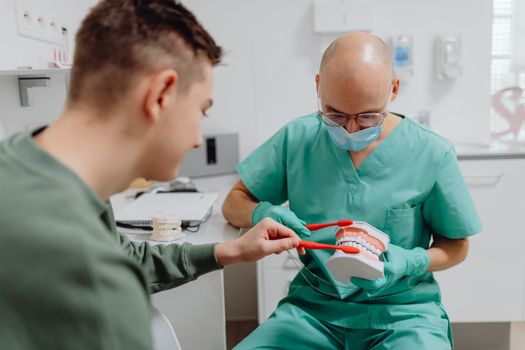
A first orthodontic visit for a young child is usually straightforward and non-invasive. The orthodontist will look at the teeth, examine how the jaws come together, and ask about your child’s dental history, habits, and any concerns you have noticed at home.
Depending on the practice, the visit may include records such as photographs or imaging to document the current stage of development. Those records become a reference point, which is useful even if no treatment is recommended right away. Comparing images over time shows whether a developing issue is progressing or holding steady.
You should leave the appointment with a clear answer to three questions: does my child need treatment now, does my child need to be watched, or is there nothing to address at this time. If the recommendation is to watch, ask when you should return. If treatment is recommended, ask what the specific goal is and how long the phase is expected to last.
Signs Parents Can Watch For at Home
You do not need to diagnose anything yourself, but you know your child’s mouth better than anyone. Certain patterns are worth mentioning to a dentist or orthodontist:
-
Crowded or overlapping teeth, or teeth that come in out of line
-
An upper jaw that sits noticeably behind or ahead of the lower jaw
-
Difficulty biting or chewing certain foods
-
Mouth breathing, snoring, or habits like thumb sucking that continue past early childhood
-
Baby teeth lost much earlier or later than expected
-
A jaw that shifts or makes a sound when your child opens and closes
-
Teeth that do not meet at all in the front when the back teeth are closed
If one of these stands out to you, it does not mean something is wrong. It means an orthodontist should take a look. Early evaluation is not about finding problems everywhere. It is about not missing the ones that are actually there.
The Takeaway for Parents
Early orthodontic treatment exists on a spectrum. At one end is a simple evaluation with no treatment recommended. In the middle is a period of watching a developing bite. At the other end is a short Phase 1 treatment plan aimed at guiding growth while your child is still growing.
The reason age 7 comes up repeatedly is that it captures a moment when all three of those outcomes are still available. Wait too long and the third option may disappear. An evaluation costs you one appointment and gives you information you can act on. For most families, that is a fair trade.
Frequently Asked Questions
Does every child need an orthodontic evaluation at age 7?
No. An evaluation at 7 is a checkpoint, not a requirement for treatment. Many children are examined and simply monitored on a recall schedule. The value is in establishing a baseline and catching growth problems while the jaw is still developing. If your child is around that age and has not been checked, a consultation is worth scheduling.
What is the difference between Phase 1 and Phase 2 treatment?
Phase 1 is early treatment that happens while some baby teeth are still present, usually lasting around 10 to 15 months plus a period of retainer wear. Phase 2 is the comprehensive phase that happens later, once most permanent teeth have erupted. Phase 1 addresses growth and structure, while Phase 2 refines final tooth position.
Can orthodontic problems wait until my child is a teenager?
Some can, and many do. Standard treatment for common orthodontic problems typically begins around age 9 to 14. However, certain jaw growth and bite issues are best addressed while the jaw is still developing. Waiting can turn a straightforward correction into a more involved one, which is why early evaluation matters.
Will my child need braces at age 7 if treatment is recommended?
Not always in the traditional sense. Early treatment may involve appliances designed to guide jaw growth or create space for incoming teeth rather than a full set of braces on every tooth. The specific approach depends on what the orthodontist finds, and some children need only a brief phase of care.
What should I bring to a first orthodontic consultation?
Bring your dental insurance information if you have it, the name of your child’s dentist, and any records or imaging the dentist has already taken. Also bring your observations. Habits, breathing patterns, and earlier tooth loss are useful details. Write down your questions ahead of time so you leave with clear next steps.